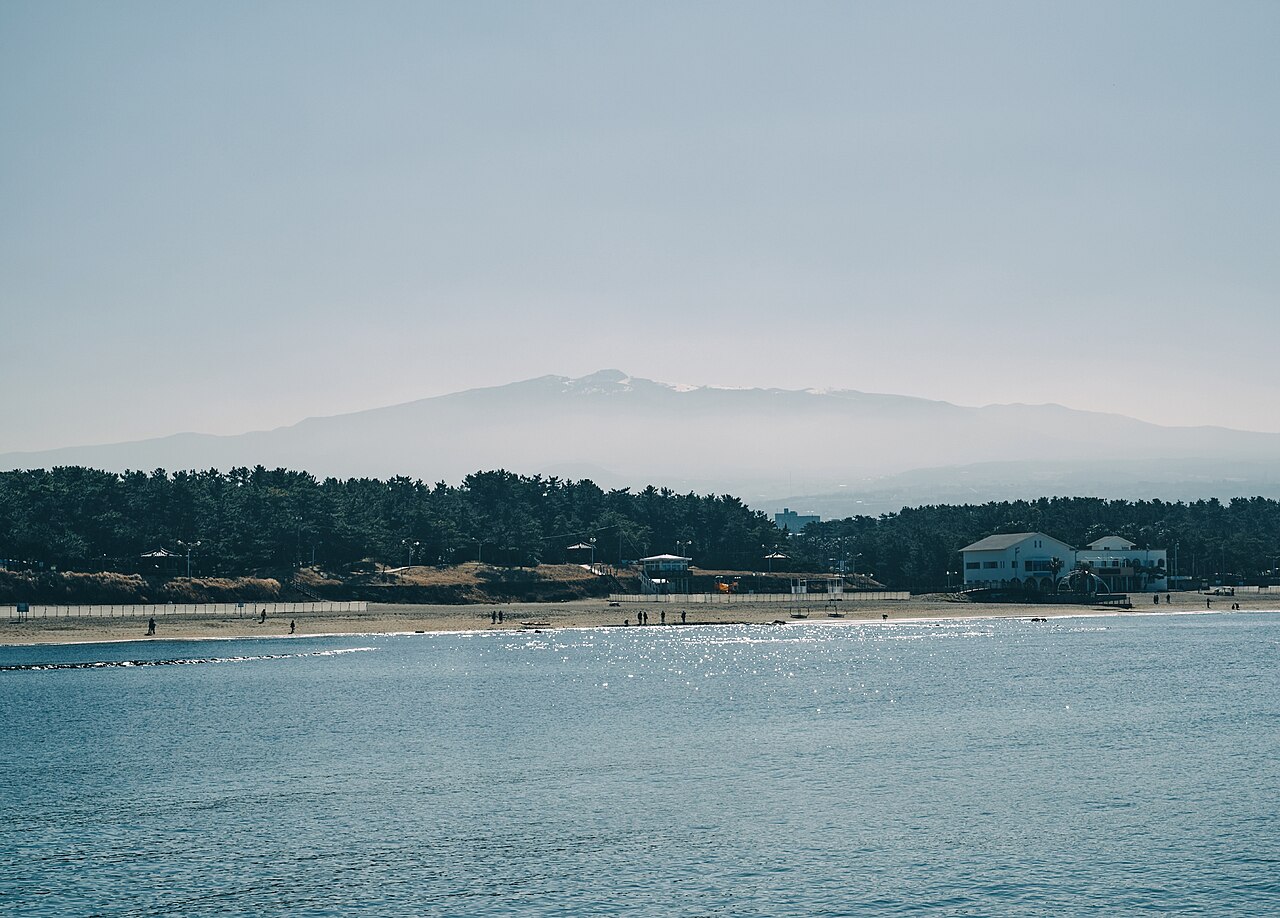
Eoseungsaengak is one of the best choices for travelers who want a real Hallasan landscape without committing to an all-day summit hike. It begins near the Eorimok visitor area on the 1100 Road and climbs a volcanic cone with broad mountain views. Official Korea Tourism Organization material describes the route as about 1.3 km one way and roughly 30 minutes one way, although your actual time will depend on weather, fitness and photo stops.
Why choose Eoseungsaengak?
Many first-time visitors hear “Hallasan” and immediately think of Baengnokdam summit. That is not the only way to experience the national park. Eoseungsaengak is a shorter trail that lets you see high-elevation forest, volcanic terrain and wide views without spending eight or nine hours on the mountain.
It is especially useful for families with older children, travelers with limited time, people testing their comfort with mountain conditions and anyone whose Jeju itinerary does not allow a full summit day.
No summit reservation is required for this trail
Current Visit Jeju guidance explains that the reservation system applies to the upper summit sections of the Seongpanak and Gwaneumsa trails. Eorimok, Yeongsil, Donnaeko, Eoseungsaengak and Seokguram can be explored without the summit reservation under normal operations.
This does not mean the trail is always open. Hallasan National Park can restrict entry because of weather, snow, wind, trail conditions or safety management. Check the official trail status on the day.
Where does the trail start?
The official Visit Jeju listing gives the Eoseungsaengak area address as 555, 1100-ro, Haean-dong, Jeju-si, near the Eorimok visitor facilities. If you are driving, navigate to the official Eorimok/Eoseungsaengak area rather than searching only the English trail name on an international map.
Without a car, Jeju Bus 240 is the key route to understand. The official Jeju Bus Information System lists Route 240 from Jeju Bus Terminal via the Eorimok entrance and the 1100 Road toward Jungmun and the convention-center area.
How hard is it?
Eoseungsaengak is short, but short does not mean flat. You gain elevation on a mountain path and can encounter wet, icy or uneven surfaces. Visit Jeju’s 2026 autumn recommendations classify Eoseungsaengak as a beginner-friendly Hallasan option, which is a fair description for normal conditions.
A fit traveler may reach the top quickly, but there is no reason to race. Slow down on slippery steps, give descending hikers space and save energy for the return walk.
How much time should you allow?
The old rule of “30 minutes each way” is useful for orientation but not for scheduling a bus connection. Plan around 1.5 to 2 hours for the entire stop if you are using public transport. That gives you time to find the trail entrance, hike, rest at the top when conditions allow, descend and reach the bus stop without running.
Drivers can be slightly more flexible, but mountain parking and seasonal crowds can still add time.
Seasonal entry-control times matter
Hallasan National Park sets entry-control times so hikers can finish before dark. The official trail information currently shows seasonal cutoffs for Eoseungsaengak, with later entry possible in longer-day seasons and earlier cutoffs in winter. The exact table has changed over time, so do not rely on a screenshot from an old blog.
For September 2026, the official Hallasan table places Eoseungsaengak within the autumn-control schedule. Check the current official page on the morning of your hike because weather or safety restrictions can be stricter than the normal seasonal cutoff.
Best weather for the hike
Clear conditions give the widest views, but the mountain can be rewarding in light cloud too. The problem is not simply “bad photos.” Fog, heavy rain, strong wind or ice can make a short trail much more serious. Jeju City weather is not enough: high-elevation conditions can be colder, wetter and windier.
If Hallasan is hidden under thick cloud from the city, check the park’s live information before traveling up the 1100 Road.
What to wear
- Walking or hiking shoes with decent grip.
- A light wind or rain layer even if the coast feels warm.
- Layers in spring, autumn and winter.
- Gloves and traction equipment when official winter conditions recommend them.
Sandals and smooth-soled fashion shoes are a poor choice. A short trail is still a mountain environment.
What to carry
For this trail you do not need expedition gear, but bring water, a charged phone and a small snack if needed. Carry your own trash back out. Avoid bulky picnic setups because the trail is better treated as a short hike than a long summit lunch destination.
If you are traveling by bus, keep your pack compact. Route 240 is a public bus, not a dedicated hiking shuttle.
Eoseungsaengak versus Eorimok to Witseoreum
These two options start in the same general mountain area but require very different commitments. Eoseungsaengak is the short option: a quick volcanic-cone hike with broad views. Eorimok to Witseoreum is a much longer Hallasan hike that goes deeper into the high-elevation landscape.
If you only have a morning or are unsure about your fitness, Eoseungsaengak is the safer first choice. If you want a substantial hike and have appropriate weather, equipment and time, Eorimok to Witseoreum offers a fuller mountain day.
Eoseungsaengak versus Seongpanak summit hiking
Seongpanak is designed around a completely different goal: reaching Baengnokdam through the reservation-controlled upper section. It is longer, more demanding and requires a full-day schedule. Eoseungsaengak does not reach the Hallasan summit and should not be marketed as a shortcut to Baengnokdam.
Choose based on the experience you want, not the idea that one trail is “better.” A short mountain walk can fit a broader Jeju day much more naturally.
A car-free half-day plan
- Check Hallasan trail status and 1100 Road traffic conditions.
- Take a suitable bus to the Eorimok area, confirming the current Route 240 timetable.
- Hike Eoseungsaengak at a relaxed pace.
- Return to the bus stop with at least one service interval of buffer.
- Continue to Jeju City or Jungmun depending on your route.
Do not plan another timed attraction immediately after the hike if you are relying on the bus. Mountain-road traffic and service intervals can make exact connections fragile.
Driving plan
If you have a rental car, Eoseungsaengak pairs well with a 1100 Road drive, but only when roads are fully open. In winter or severe weather, police and road authorities may restrict the 1100 Road. Never ignore road controls just to reach a snow viewpoint.
After the hike, continue toward Jungmun if that matches your accommodation, or return to Jeju City. Avoid zigzagging to the far east or west on the same half-day.
History at the summit area
Visit Jeju notes traces of a Japanese military facility at the summit dating from the colonial period. This is a reminder that the oreum is not only a scenic platform. Treat any historical remains as protected landscape rather than climbing on or moving objects for photos.
Photography tips
Wide landscape photos work best when visibility is good, but avoid stepping off the trail for a cleaner foreground. Vegetation on volcanic slopes can be easily damaged. If the summit is crowded, take a few photos and move aside rather than holding the best viewpoint for a long portrait session.
Common mistakes
- Assuming a short trail cannot close in bad weather.
- Planning around coastal temperatures instead of mountain conditions.
- Confusing Eoseungsaengak with the longer Eorimok route.
- Arriving close to the seasonal entry cutoff.
- Using the final bus of the day as your only return plan.
FAQ
Do I need a Hallasan summit reservation?
Under current official guidance, Eoseungsaengak is outside the summit reservation sections and can normally be visited without that reservation. Always check current trail status.
How long is it?
Official Korea Tourism Organization hiking material describes it as about 1.3 km one way and roughly 30 minutes one way.
Is it suitable for beginners?
In normal conditions, yes. Visit Jeju’s 2026 autumn guide classifies it as a beginner-friendly Hallasan option, but wet, icy or windy conditions can make it harder.
Can I visit in winter?
Yes when the trail and road are open, but winter conditions require more caution, appropriate footwear and same-day checks.
Final advice
Eoseungsaengak is valuable precisely because it does not try to be the summit hike. It gives travelers a short, legitimate Hallasan experience that can fit into a half-day. Respect the mountain conditions, check entry controls and road status, and give public-transport connections enough buffer.
Last verified: September 23, 2026.
Official sources
Visit Jeju: Eoseungsaengak · Hallasan National Park: Trail Entry Control Times · Hallasan Trail Information
Related guide: Jeju Bus 240 Guide.