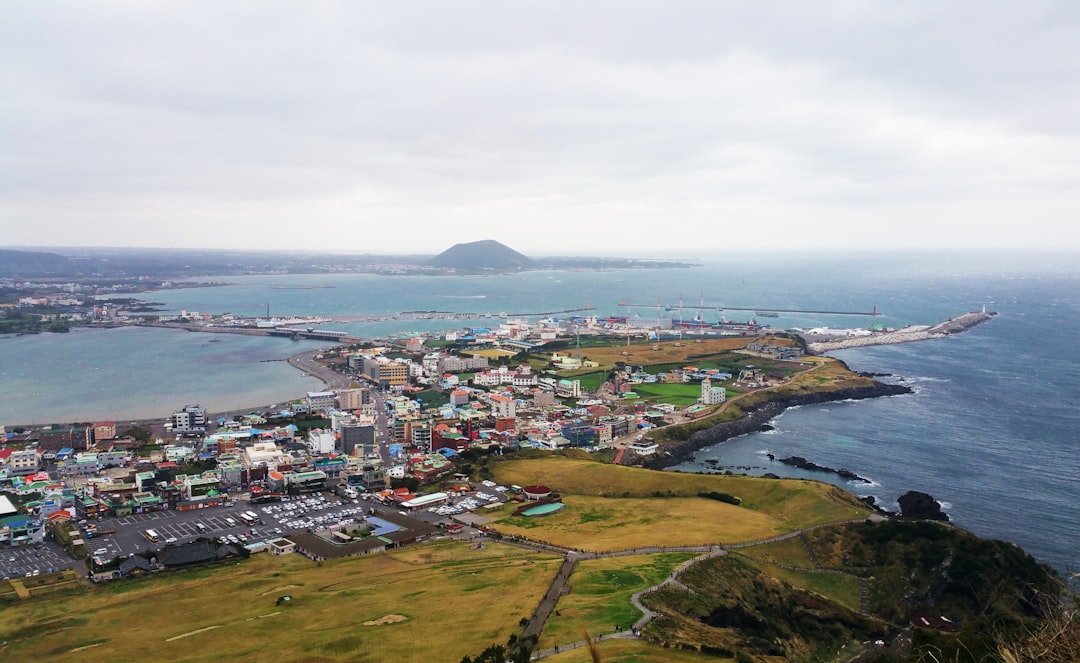
Seongsan and Pyoseon are both on Jeju’s eastern side, but they produce very different trips. Seongsan is the better-known sightseeing base, built around Seongsan Ilchulbong, Seongsan Port and easy access to Udo and the northeast coast. Pyoseon is quieter and more spread out, with Pyoseon Beach, Jeju Folk Village, coastal roads and a slower southeastern atmosphere.
If you are choosing only one east-Jeju hotel, the right answer depends less on hotel quality than on what you want to do before breakfast and after dinner.
Quick answer
- Choose Seongsan for sunrise, Udo, Seopjikoji, northeast Jeju and a sightseeing-heavy first trip.
- Choose Pyoseon for a quieter beach base, Jeju Folk Village, southeastern drives, family downtime and a slower stay.
- Choose neither if most of your itinerary is Jeju City, Aewol, Hyeopjae or Jungmun; the daily crossing will waste time.
Why Seongsan feels more like a sightseeing base
Seongsan’s geography is unusually convenient for travelers with a clear checklist. Seongsan Ilchulbong is right there, the port is the gateway for many Udo trips, and Seopjikoji and east-coast attractions are nearby. The official Visit Jeju page describes Seongsan Ilchulbong as a UNESCO World Natural Heritage site and one of eastern Jeju’s defining landscapes.
This concentration makes Seongsan especially useful for two-night stays. You can arrive in the afternoon, explore the coast, wake early for sunrise, then use the next day for Udo or northeast Jeju without repeatedly driving across the island.
Why Pyoseon feels slower
Pyoseon is less about one headline attraction and more about a cluster of low-pressure experiences. Visit Jeju highlights Pyoseon Beach for its broad white-sand landscape and places Jeju Folk Village only about 100 meters away. The official tourism site also describes Pyoseon’s coastal roads and Olle connections as part of a quieter local-travel area.
That makes Pyoseon a strong base when your idea of a good Jeju morning is a beach walk, coffee and a flexible drive rather than a timed sunrise climb.
Sunrise: Seongsan wins easily
If sunrise is a major reason for your trip, stay in Seongsan. The practical advantage is not only the view. You can wake up, reach the Seongsan Ilchulbong area without a long pre-dawn drive and return to your hotel for breakfast or a rest.
Staying in Pyoseon and driving to Seongsan for sunrise is possible, but it removes much of the convenience. In poor weather, you may make an early drive only to find cloud hiding the sunrise. Seongsan lets you make that decision with less commitment.
Beach time: Pyoseon has the more relaxed base
Pyoseon Beach changes visibly with the tide. Visit Jeju describes a broad white-sand area that becomes very shallow when water comes in. It is especially appealing for a slow walk and for families who want open space rather than a tightly packed sightseeing stop.
Seongsan has coastal views, but it is not the same kind of beach-base experience. If your priority is “wake up near a spacious beach and take the day slowly,” Pyoseon has the clearer advantage.
Udo day trip: Seongsan is much more practical
Travelers planning Udo usually benefit from staying near Seongsan because the port area is close. Ferry operations depend on weather and current port schedules, so you should still check same-day information, but a nearby hotel removes a large land-transfer component from the morning.
From Pyoseon, Udo is still reasonable as a day trip by car or bus, but you need to add the trip to Seongsan Port. If Udo is one of your top two Jeju priorities, Seongsan is the more logical base.
Jeju Folk Village and local culture: Pyoseon
Jeju Folk Village is one of Pyoseon’s strongest anchors. Visit Jeju describes the open-air site as preserving traditional Jeju culture through authentic historic houses and reconstructed village environments. It pairs naturally with Pyoseon Beach and the nearby coastal road.
This is useful for families, travelers interested in local history and anyone who wants one day with very little driving.
Food and evening atmosphere
Seongsan generally feels busier with travelers because of its major attractions. You will find many restaurants aimed at visitors, especially seafood, black pork and casual Korean meals. The downside is that some streets feel distinctly tourist-oriented.
Pyoseon has fewer concentrated tourist blocks. Restaurants can be more spread out, and a rental car is helpful if your accommodation is outside the main beach area. The reward is a quieter evening with less pressure to “do” something after dinner.
Public transportation
Neither area is as convenient as central Jeju City for bus connections, but both are reachable by regional routes. Seongsan has an advantage if your itinerary follows the eastern tourist corridor because many routes and transfers are built around Seongsan, Seongsan Port and nearby towns.
Pyoseon is connected by routes across southeastern Jeju and is served by buses that link Jeju City through inland corridors. Still, a car makes a Pyoseon stay significantly easier if you want to visit small cafés, beaches or oreum outside the main village.
Always check current bus times in the Jeju Bus Information System, Naver Map or Kakao Map. Rural service intervals matter more than route distance.
Rental car: both work, but Pyoseon benefits more
With a car, both bases become much stronger. Seongsan gives quick access to the east and northeast. Pyoseon gives you freedom to explore Namwon, Seongeup, the southeastern coast and inland roads without relying on infrequent buses.
If you do not plan to rent a car and this is your first Jeju trip, Seongsan is usually easier because the main attractions are more concentrated.
Families with children
Pyoseon is attractive for families who want space and a calmer schedule. Pyoseon Beach and Jeju Folk Village can fill a day without constant driving. The flatter coastal environment can also be easier than stacking several volcanic-cone hikes and ferry schedules.
Seongsan is better for older children who enjoy active sightseeing, climbing Seongsan Ilchulbong, ferry trips and moving between several famous stops.
Couples
Choose based on travel style. A couple focused on sunrise photos, Udo and cafés around Seongsan should stay in Seongsan. A couple looking for quiet beach walks, a resort stay or slow drives may prefer Pyoseon.
Do not assume “quieter” means “more romantic” for everyone. If one person gets bored without evening choices, Seongsan’s busier visitor infrastructure may actually create a better trip.
Solo travelers
Solo travelers without a car will usually find Seongsan more straightforward. There are more obvious visitor-oriented restaurants and attractions within a compact sightseeing area. Pyoseon is peaceful, but a remote pension can feel isolating if you are relying entirely on buses.
If you choose Pyoseon solo, stay close to the beach or main village rather than several kilometers inland unless you are comfortable with taxis.
Rainy-day differences
Rain can reduce the value of both areas, but Pyoseon has Jeju Folk Village as a cultural option while Seongsan offers cafés, nearby museums and the possibility of adjusting the Udo day. Ferry operations can be affected by weather, so never make Udo your only plan for a rainy or windy day.
Keep one indoor or low-exposure backup in the same region instead of driving to the opposite side of Jeju just because the forecast changed.
A two-night Seongsan plan
Day 1: arrive, explore Seopjikoji or the coast and eat near Seongsan. Day 2: sunrise or early Seongsan Ilchulbong, then Udo if ferries operate. Day 3: check out and continue through northeast Jeju toward Bijarim, Sehwa or Woljeongri.
This route minimizes backtracking and makes Seongsan’s biggest geographic advantages work for you.
A two-night Pyoseon plan
Day 1: check in, walk Pyoseon Beach and eat locally. Day 2: Jeju Folk Village, Seongeup or an eastern oreum, then a coastal drive. Day 3: continue west toward Namwon/Seogwipo or north toward Seongsan depending on your next base.
Pyoseon works best when the trip itself is slower. If you schedule five major attractions per day, you lose the reason to stay there.
Which is better for one night?
For one night, Seongsan usually gives more obvious value because you can attach the stay to sunrise or an early Udo departure. Pyoseon becomes more rewarding with two or more nights because the appeal is the rhythm of the area rather than one must-see event.
Which is better for a longer stay?
For three or four nights, Pyoseon can work well for travelers who want a resort-like or local southeast base and are comfortable driving. Seongsan can start to feel repetitive after the main east-Jeju attractions are complete unless you plan multiple hikes, Udo or extensive northeast exploration.
Airport access
Neither location is ideal for a very early flight compared with Jeju City. If your departure is before breakfast, consider spending the final night near the airport rather than forcing a pre-dawn drive from eastern Jeju. This is especially important in winter or bad weather.
Hotel location inside each area matters
“Seongsan” and “Pyoseon” cover more than one street. Before booking, map the exact hotel to the bus stop, restaurants and the attraction you care about. A hotel labeled “near Seongsan” can still require a taxi to the peak entrance. A Pyoseon pension may be several kilometers from the beach.
Check the real walking route, not only the straight-line distance shown by the booking platform.
What travelers often get wrong
- Booking Seongsan because it is famous even though every planned attraction is in west Jeju.
- Booking a remote Pyoseon property without a car and assuming taxis will always be immediate.
- Planning Udo from Pyoseon without adding port-transfer time.
- Expecting Pyoseon to have a dense nightlife district.
- Expecting Seongsan to feel quiet around major attraction times.
Decision table
Sunrise: Seongsan. Udo: Seongsan. Quiet beach walks: Pyoseon. Jeju Folk Village: Pyoseon. First-time car-free stay: Seongsan. Slow road trip with a rental car: Pyoseon. One-night stop: Seongsan. Relaxed multi-night southeast base: Pyoseon.
FAQ
Can I visit Seongsan from Pyoseon?
Yes. They are both in eastern/southeastern Jeju, and a car makes the trip straightforward. The question is whether you want to make that transfer before sunrise or an early ferry.
Is Pyoseon too quiet?
Not if quiet is what you want. It has beach, cultural and dining options, but it is less concentrated than Seongsan and benefits from a rental car.
Which is better without a car?
For most first-time visitors, Seongsan is easier because major attractions are more concentrated. Pyoseon is possible without a car but requires more careful bus planning.
Which is better for children?
Pyoseon can be easier for younger children because of the broad beach and Jeju Folk Village. Older children may enjoy Seongsan’s active sightseeing and Udo trip.
Final recommendation framework
Do not choose between Seongsan and Pyoseon by asking which place is “better.” Choose the morning you want to wake up to. If you want sunrise, Udo and famous east-Jeju landmarks, sleep in Seongsan. If you want a quiet beach, local culture and a slower southeastern rhythm, sleep in Pyoseon. Your hotel should reduce driving, not create another daily commute.
Last verified: September 23, 2026.
Official sources
Visit Jeju: Seongsan Ilchulbong · Visit Jeju: Pyoseon Beach · Visit Jeju: Jeju Folk Village
Related guide: Seogwipo vs Seongsan.