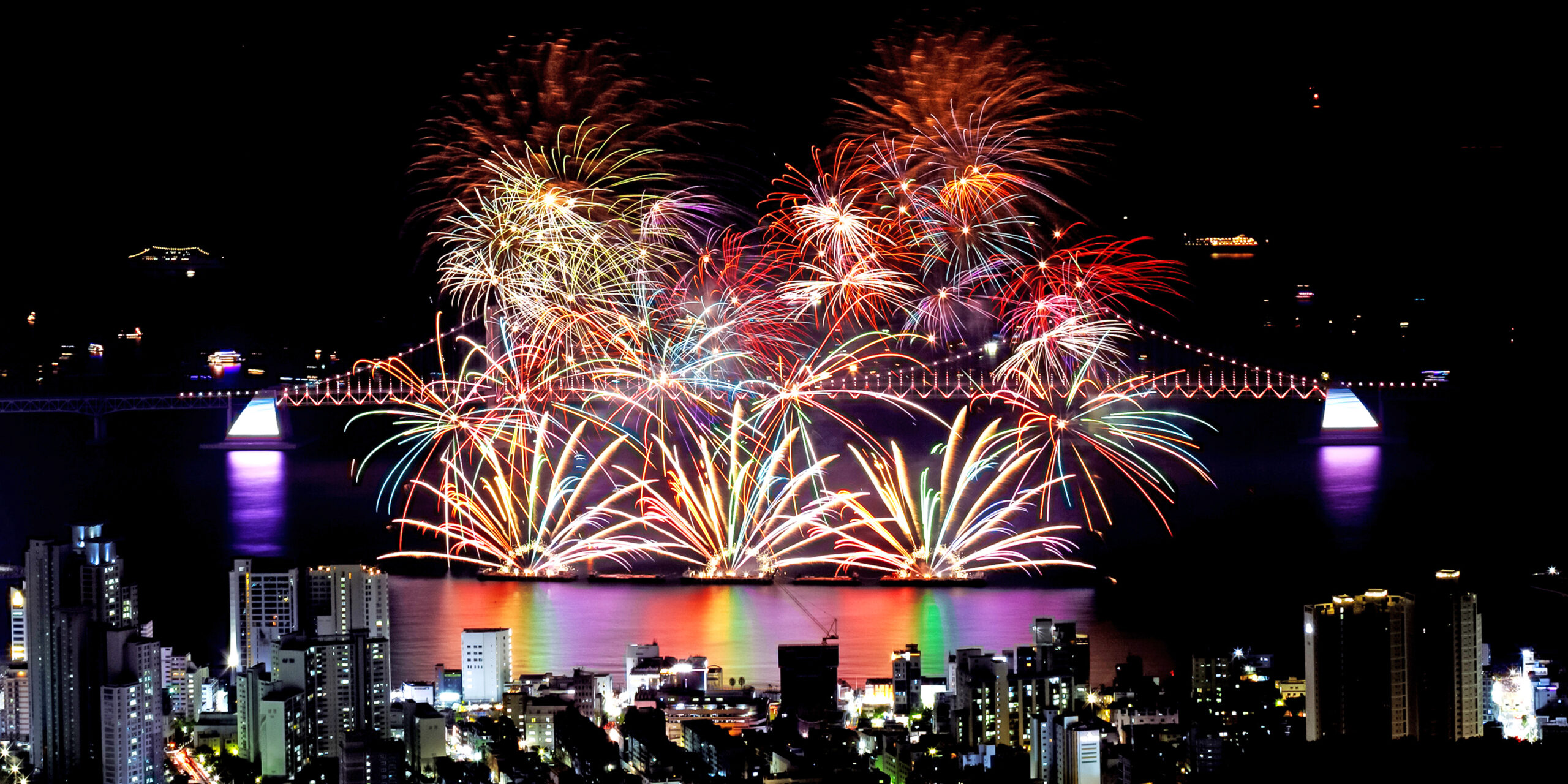
The Busan Fireworks Festival is one of Korea’s biggest single-night events, and the 2026 edition is now far enough along that travelers can plan around a confirmed date rather than a rumor. The official Busan Fireworks Festival website lists the 21st Busan Fireworks Festival for Saturday, November 7, 2026, with the event area spanning Gwangalli Beach, Igidae and Dongbaekseom.
That confirmation is useful, but it does not mean every operational detail is final. The safest way to plan is to separate what the organizers have already confirmed from what may still change as traffic-control maps, program times and on-site rules are updated closer to November.
What is officially confirmed for 2026
- Date: Saturday, November 7, 2026
- Main areas: Gwangalli Beach, Igidae and Dongbaekseom
- Host: Busan Metropolitan City
- Organizer: Busan Festivals Organization
- Regular ticket sales: the official reservation page lists a regular-ticket sales period beginning September 4, 2026 and running until November 6, subject to availability and the ticketing platform’s conditions.
The official English site currently directs visitors to its ticket reservation section. It also still contains some program material from the previous festival, so do not assume an older timetable is the 2026 timetable simply because it appears on the same website.
Free viewing versus reserved seating
Busan’s fireworks are visible from a wide waterfront area, which is why many travelers watch without buying a reserved seat. Gwangalli Beach gives the classic view toward Gwangan Bridge, while other coastal viewpoints can offer a broader or angled perspective.
A paid reservation can be worthwhile if your priority is a defined seat and a more predictable viewing position. Free viewing is better for travelers who value flexibility and are comfortable arriving early, standing or sitting in a crowded public area, and accepting that sightlines vary.
Do not treat a ticket as a substitute for transport planning. Even reserved-seat holders still have to reach and leave a district handling a very large crowd.
Where should a first-time visitor stay?
If the fireworks are the main purpose of your trip, staying within walking distance of Gwangalli can reduce the hardest part of the night: leaving after the show. Accommodation near Gwangan, Geumnyeonsan or Suyeong can be especially practical if you do not want to depend on a long post-event subway journey.
Staying in Seomyeon, Nampo or Haeundae can still work, but the trade-off is a busier return trip. A hotel that looks only 20 or 30 minutes away on a normal day may feel much farther away after a major festival when stations and roads are crowded.
How early should you arrive?
The organizers had not published a complete 2026 English timetable at the time this guide was checked, so it would be misleading to give a precise ‘arrive by’ time as if it were official. In practical terms, free-viewing visitors should plan for a substantial buffer before the main fireworks. That buffer is useful for finding a legal viewing area, eating, using restrooms and learning where crowd-control barriers have been placed.
For a major event, the final hour before showtime is usually the worst time to improvise. If you want dinner in the Gwangalli area, consider eating well before peak crowds or choosing a place away from the immediate beachfront.
Transport strategy: subway first, taxi last
On a normal evening a taxi may be convenient, but during a city-scale fireworks festival road controls and congestion can make it the least predictable option near the venue. The subway is generally the more resilient backbone for getting into and out of the district.
For Gwangalli, travelers typically use Gwangan or Geumnyeonsan stations and walk. The exact pedestrian flows and road closures can change each year, so check the festival’s official traffic notice shortly before November 7 rather than relying on a map from 2025.
A simple one-day plan
- Late morning: arrive in Busan and leave luggage at your accommodation.
- Early afternoon: visit a nearby district rather than crossing the city repeatedly.
- Mid-afternoon: eat a substantial meal before the beachfront becomes extremely busy.
- Before peak arrival: move to the official event area and identify exits, restrooms and your viewing zone.
- After the fireworks: avoid racing immediately for the closest station if crowd-control staff are metering entry. A short wait or walk to a less-congested route can be more comfortable.
If you are building a wider Seoul-and-Korea autumn trip, compare this with our Hangang River Festival Fall 2026 guide so you do not accidentally stack too many large events into the same itinerary.
What to bring
- A charged phone and a compact power bank
- A transit card with enough balance for the return trip
- A light outer layer for a cool November evening
- Only the amount of food and drink you can comfortably carry in a crowd
- A screenshot of your accommodation address in Korean
Avoid bulky luggage. This is not just about comfort: large bags make dense pedestrian areas harder to navigate and can slow security or access checks if organizers add them.
What is not safe to assume yet
Do not copy an old festival timetable, road-closure schedule or entrance procedure into your 2026 plan. The official site confirms the date and event areas, and its reservation page is live, but detailed program and traffic information can be updated later. Always use the 2026 notice page in the final week.
FAQ
Is the Busan Fireworks Festival free?
Large public areas can be used for free viewing, while the official festival also sells reserved tickets. Free viewing does not guarantee a clear or seated view.
Is November 7, 2026 confirmed?
Yes. The official Busan Fireworks Festival site lists Saturday, November 7, 2026 for the 21st festival.
Is Gwangalli the only place to watch?
No. The official event footprint includes Gwangalli Beach, Igidae and Dongbaekseom areas. Gwangalli remains the most familiar first-time view because of Gwangan Bridge, but it is not the only official event area.
Should I rent a car for festival day?
A car usually adds complexity on a major event night because parking, closures and traffic can change. If the rest of your Busan trip needs a car, consider leaving it parked and using rail or walking for the festival itself.
Official sources
Checked September 19, 2026. Recheck the official site before travel because traffic controls, detailed program times and ticket availability can change.