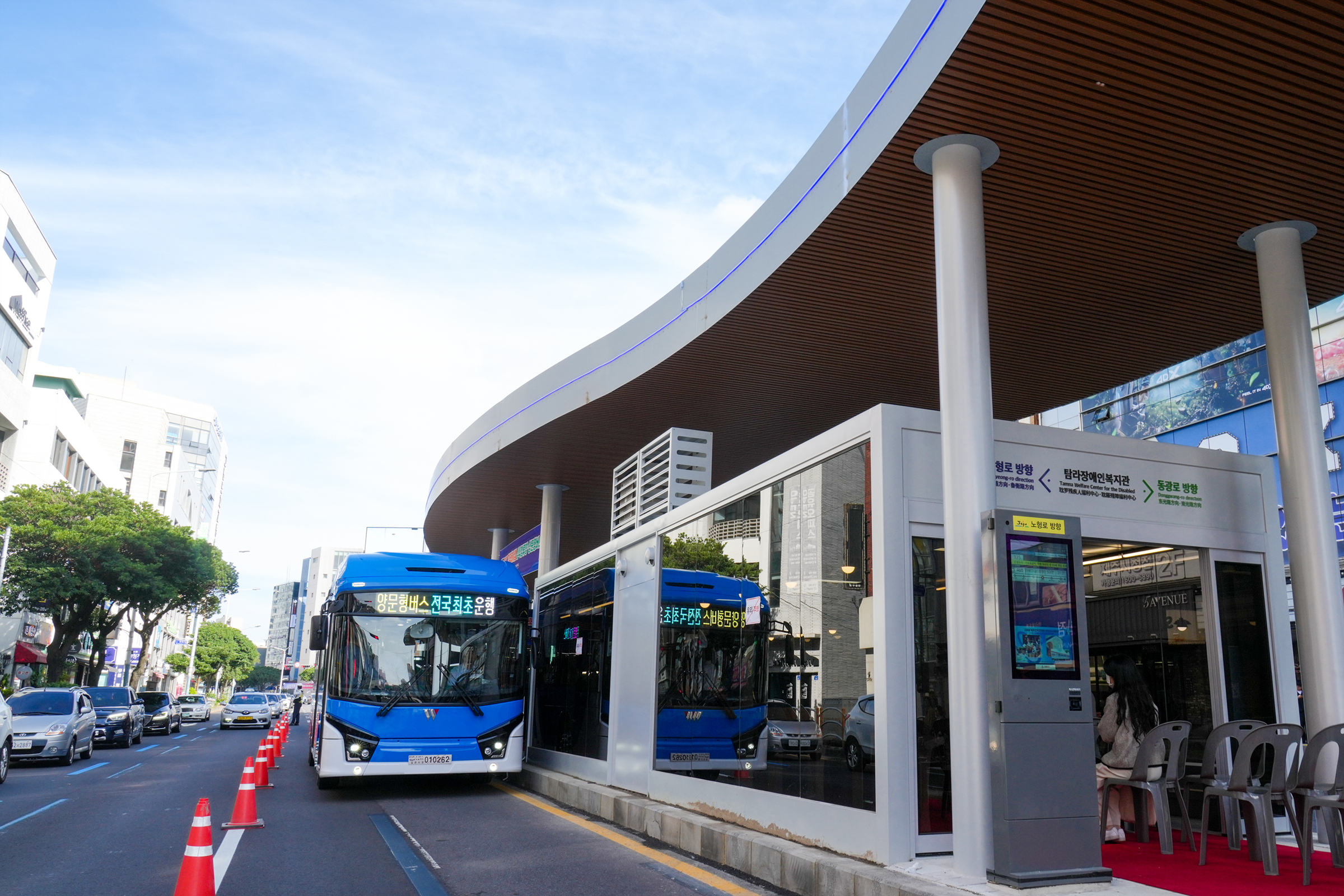
To catch the right bus on Jeju, match four things: route number, stop number, direction, and the ordered stop list. A familiar route number alone is not enough. The bus on the other side of the road may carry the same number while taking you away from your destination, and a live countdown cannot correct a mistaken boarding point.
Use the official Jeju Bus Information System website on your phone. Its July 27, 2026 notice announces the end of the official mobile app service and directs travellers to use the website, including adding it to the phone’s home screen. Advice that tells you only to install the old official app is therefore outdated. Keep the mobile website available before you leave Wi-Fi.
Set up the official website for a real journey
The official app-service notice is the reference for that change. Open the bus website in your normal mobile browser, choose a supported language if needed, and bookmark it. You can use the browser’s Add to Home Screen function for quicker access; the wording and menu location depend on your phone and browser.
The website supports searches using route numbers, bus-stop names, and stop numbers. A map app is useful for planning the walk to a stop, while the official system helps confirm the stop and current bus information. Use the two views together rather than assuming one screenshot contains everything. A route-planning result may become stale if you delay departure for lunch or photographs.
Save the Korean name of your destination and the entrance you want. A large park, beach, or museum can have several nearby stops with very different walks. Decide where you need to arrive before choosing the bus. If the suggested final walk crosses a difficult road or is too long for your group, look for another stop or a taxi for that leg.
Keep mobile data available and start the day with enough battery for the return journey. A screenshot is useful for a stop name and a route map, but it cannot update a live arrival. If connectivity fails, use the physical stop information and a saved timetable while allowing more uncertainty, especially for the final service of the day.
Identify the physical stop before reading its countdown
| Label | Meaning | What to compare |
|---|---|---|
| 정류소 / 정류장 | Bus stop | The name on the shelter and in your search |
| 정류소 번호 | Stop number | The identifier for this exact boarding point |
| 방면 | Direction or bound for | The side of the route leading toward your destination |
| 도착 예정 | Expected arrival | A live estimate for the selected stop |
| 종점 | Terminus | The end point that helps distinguish direction |
| 막차 | Last bus | The timetable context, not automatically a downstream stop time |
When you reach the stop, compare the stop number on the sign with the one displayed on your phone. Nearby stops can share a similar name but have different identifiers. This is especially important around intersections, terminals, and attractions served from both directions. Do not assume the nearest shelter is correct simply because the map’s blue location dot is close to it.
Read the route’s subsequent stops. Your destination should appear ahead of the boarding point in the direction you selected. If it appears behind you in the sequence, you may be looking at the opposite direction. The terminus name can provide another clue, but it is not a substitute for checking the destination’s position in the list.
If you need to cross the road, use a proper crossing and make the change before the bus is approaching. A countdown that says a bus is close is not a reason to run across traffic. Missing one bus is easier to manage than boarding from the wrong side or taking an unsafe shortcut between stops.
Read live arrivals as estimates, not reservations
A live estimate reflects the information the system currently has about a vehicle’s progress. Traffic, a long boarding stop, temporary diversions, or a data delay can change it. Refresh the page while waiting and watch the road as well as the screen. A bus may arrive earlier than an old screenshot suggests, and staring at a phone can make you miss the vehicle when several routes arrive together.
If the display shows a number of stops remaining, compare that with the route map rather than converting each stop into a fixed number of minutes. Stops can be close together in one area and far apart in another. A vehicle two stops away on a busy urban road may behave very differently from one two stops away on a rural section.
No live prediction does not necessarily prove that no bus will come. The vehicle may not yet have begun the relevant trip, the system may lack current data, or you may have selected the wrong stop. Check the published schedule and the route notices before abandoning the journey. If the information remains uncertain late in the day, choose a workable alternative while you still have options.
When the bus arrives, confirm the displayed route number and destination. Some routes have variants or particular trips that serve different stop sequences. The color or general appearance of the bus is less useful than the actual route display. If still unsure, show the driver the Korean destination and ask “여기 가나요?” — “Does this go here?” before tapping in and moving down the aisle.
Check route variants, transfers, and the last useful trip
Use the official route timetable page for scheduled service and the notice board for changes. Read the date and applicable day type on a timetable. A weekday schedule, weekend schedule, or special holiday arrangement may not apply to the day you are travelling.
Find out what the timetable’s listed time represents. It may be a departure from the route origin rather than the time at your intermediate stop. Do not turn an origin departure into a precise downstream arrival by guessing the driving time. Use the stop’s live information where available, arrive with a margin, and keep the printed schedule’s context in mind.
For a transfer, check both boarding points, the walking route between them, and the next useful departure. Two stops with the same general place name may be on different sides of a road or in separate parts of a terminal. A connection that appears possible with no delay can become impractical after a short wait at the first attraction’s exit.
The last bus on a route may not be the last useful bus for your whole journey. If it reaches a transfer point after the connecting route has finished, it does not get you home. Work backward from your accommodation: identify the final connection, then choose an earlier first leg with enough margin. This is particularly important after sunset or when staying away from Jeju City’s main transport corridors.
Use a simple boarding routine
Before leaving a café, hotel, or attraction, refresh the journey and check the walk to the stop. Have your transport payment method ready before the bus arrives, and confirm the route as you board. If asking the driver a question, show a short Korean place name or address rather than handing over a complicated itinerary. Move away from the boarding area once the question and payment are complete.
Track your progress using the stop announcements, the route display, and your map position. Do not rely on one English pronunciation alone if the name is unfamiliar. Identify the stop immediately before yours so that you have time to prepare. Press the stop-request button in time and gather your belongings without standing unsafely while the vehicle is moving.
Follow the vehicle’s instructions for tapping out, especially when your payment or transfer arrangement requires it. Once off the bus, step away from the door and check that everyone in your group has alighted before beginning the final walk. If you miss the stop, get off at the next appropriate stop and re-plan from there; do not ask the driver to stop between designated points.
For a beach outing, an illustrative sequence is hotel to a west-coast stop, a walk to the beach, lunch, and a separate return search. Do not assume that the return bus uses the exact same shelter. Save the return stop when you first arrive, then refresh its information later. The Geumneung Beach guide explains why sunset and seasonal beach facilities should be considered alongside transport.
Resolve common problems without losing the whole day
If the route number looks right but your destination is absent from the stop list, check direction and variant first. If several buses arrive together, let the display and destination determine which one you board. If a live estimate keeps changing, compare the scheduled service and current notices rather than repeatedly assuming the previous countdown was a promise.
If a connection is too tight, shorten the sightseeing stop or use a taxi for one leg. The Korea taxi guide covers addresses, app payment, and receipts. A mixed bus-and-taxi day can preserve the part of the itinerary you care about without requiring a taxi for every journey.
For airport travel, allow time for the terminal process separately from the bus journey. The official airport bus information is a better starting point than a route number remembered from an old blog. Our 181 and 182 airport–Seogwipo guide provides route context, but current stop information and notices should settle the day’s actual connection.
A useful saved journey contains the boarding stop name and number, route and direction, alighting stop, final walk, and a return option. Once those pieces agree, the live countdown becomes a helpful timing tool. Without them, it can simply count down to the wrong bus at the wrong place.
Photo: Jeju Special Self-Governing Province Public Transportation Division · Wikimedia Commons original · KOGL Type 1. No substantive image edits; displayed responsively.