Updated: September 13, 2026.
Busan dwaeji gukbap is one of the city’s defining local meals: sliced pork served with rice and a deeply simmered pork broth. It is inexpensive, filling and available across Busan, but a first-time visitor can easily be confused by menu words such as ttaro, sundae, naejang and suyuk. This guide explains what to order and how to season the bowl without overwhelming the broth.
What is dwaeji gukbap?
Dwaeji means pork and gukbap refers to soup with rice. Korea Tourism Organization describes the Busan specialty as thinly sliced pork and rice served with pork broth made by boiling pork bones for hours. The dish is closely associated with Busan and is widely regarded as one of the city’s representative local foods.
The broth varies by restaurant. Some versions are pale and milky, while others are clearer. A darker or stronger-looking broth is not automatically better; different shops have their own methods and preferred pork cuts.
Why is it associated with Busan?
KTO links the dish’s modern Busan identity to the Korean War era, when refugees in Busan prepared filling soup using pork that was available at the time. Today, dedicated gukbap restaurants are found throughout the city, and Seomyeon’s local food street is one of the easiest concentrations for visitors to explore.
How to order: the menu words you need
Dwaeji gukbap
The standard choice: pork with broth and rice. This is the safest first order if you want to understand the basic dish.
Ttaro gukbap (따로국밥)
Ttaro (따로) means separate. The rice arrives separately from the soup, allowing you to control how much rice goes into each spoonful.
Sundae gukbap
This variation contains Korean blood sausage, usually called sundae. It can be a good choice if you already know you enjoy sundae.
Naejang or seokkeo gukbap
Naejang refers to offal. Seokkeo means mixed and can combine several pork cuts or offal depending on the restaurant. Ask what is included if you have strong preferences.
Suyuk and suyuk baekban
Suyuk is sliced boiled pork served separately rather than submerged in soup. A suyuk baekban generally pairs boiled pork with rice, soup and side dishes. For two people, sharing suyuk alongside one or two bowls of gukbap can be a satisfying way to compare textures.
How to season the soup correctly
The most useful rule is simple: taste first. Some restaurants serve the broth lightly seasoned so diners can adjust it themselves. KTO specifically recommends adding salted shrimp or salt according to taste.
Busan-style gukbap is also commonly eaten with chives. Add a small amount, stir, taste again and only then decide whether you need more seasoning. Dumping every condiment into the bowl at once can hide the flavor that distinguishes one restaurant’s broth from another.
Rice in the soup or on the side?
Some shops serve rice already incorporated into the bowl, while others offer it separately. There is no need to worry about a single correct method. If you dislike rice becoming very soft, order ttaro and add rice a little at a time.
Where should first-time visitors try it?
Seomyeon is the most convenient starting point for many travelers. KTO identifies the alley beside Seomyeon Market, around Seomyeon-ro 68beon-gil, as a local food street with multiple restaurants specializing in dwaeji gukbap. This makes it easy to fit the meal into a central Busan itinerary.
Official tourism listings highlight long-running shops in the area such as Songjeong Samdae Gukbap and Pohang Dwaeji Gukbap. Rather than treating one restaurant as mandatory, use the street as a place to compare menus, queues and the style of broth you prefer.
Outside Seomyeon, Visit Busan and KTO also list established pork-rice-soup restaurants around Suyeong, Millak and Haeundae. That means travelers do not need to cross the entire city solely for one bowl.
What should it cost?
Official tourism listings provide useful examples rather than a fixed citywide price. KTO’s published Seomyeon examples have listed standard bowls around the KRW 9,000–10,000 range, with specialty cuts and suyuk costing more. Prices can change, so always check the current menu at the restaurant rather than relying on an old blog or video.
Useful Korean phrases
돼지국밥 하나 주세요 (Dwaeji gukbap hana juseyo) — One pork rice soup, please.
밥은 따로 주세요 (Babeun ttaro juseyo) — Please serve the rice separately.
새우젓 좀 주세요 (Saeujeot jom juseyo) — Please give me some salted shrimp.
안 맵게 해 주세요 (An maepge hae juseyo) — Please make it not spicy, where adjustment is possible.
이거 얼마예요? (Igeo eolmayeyo?) — How much is this?
내장 (Naejang) — offal; 섞어 (Seokkeo) — mixed; check the cuts before ordering.
Common mistakes to avoid
Seasoning before tasting: the broth may already have enough salt.
Ordering offal by accident: check words such as naejang and seokkeo before choosing a variation.
Assuming milky broth is always richer: clear and milky styles can both be traditional and flavorful.
Crossing Busan for one viral shop: excellent gukbap is available in many neighborhoods. Choose a respected shop that fits your route.
A simple Busan food itinerary
A practical first-day route is Seomyeon sightseeing or shopping → dwaeji gukbap lunch → central Busan or Gwangalli in the afternoon. If you are staying near Haeundae, simply choose a well-established shop in that area instead of adding unnecessary travel.
For a separate seafood meal, our Jagalchi Market guide explains its different ordering and pricing system. If you are arriving from Seoul, compare the choices in our Seoul-to-Busan transport guide before arranging your first meal in the city.
Official sources:
Korea Tourism Organization — Dwaejigukbap: Busan’s Representative Local Dish
Korea Tourism Organization — Pork and Rice Soup
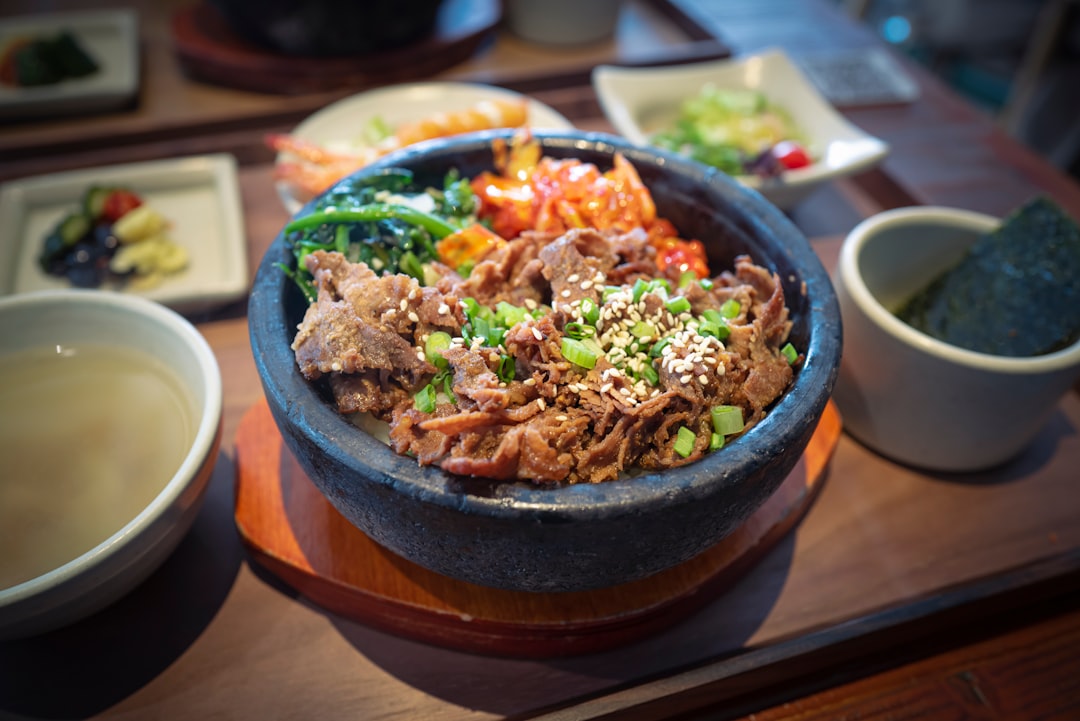
Featured photo by Zhuojun Yu / Unsplash.