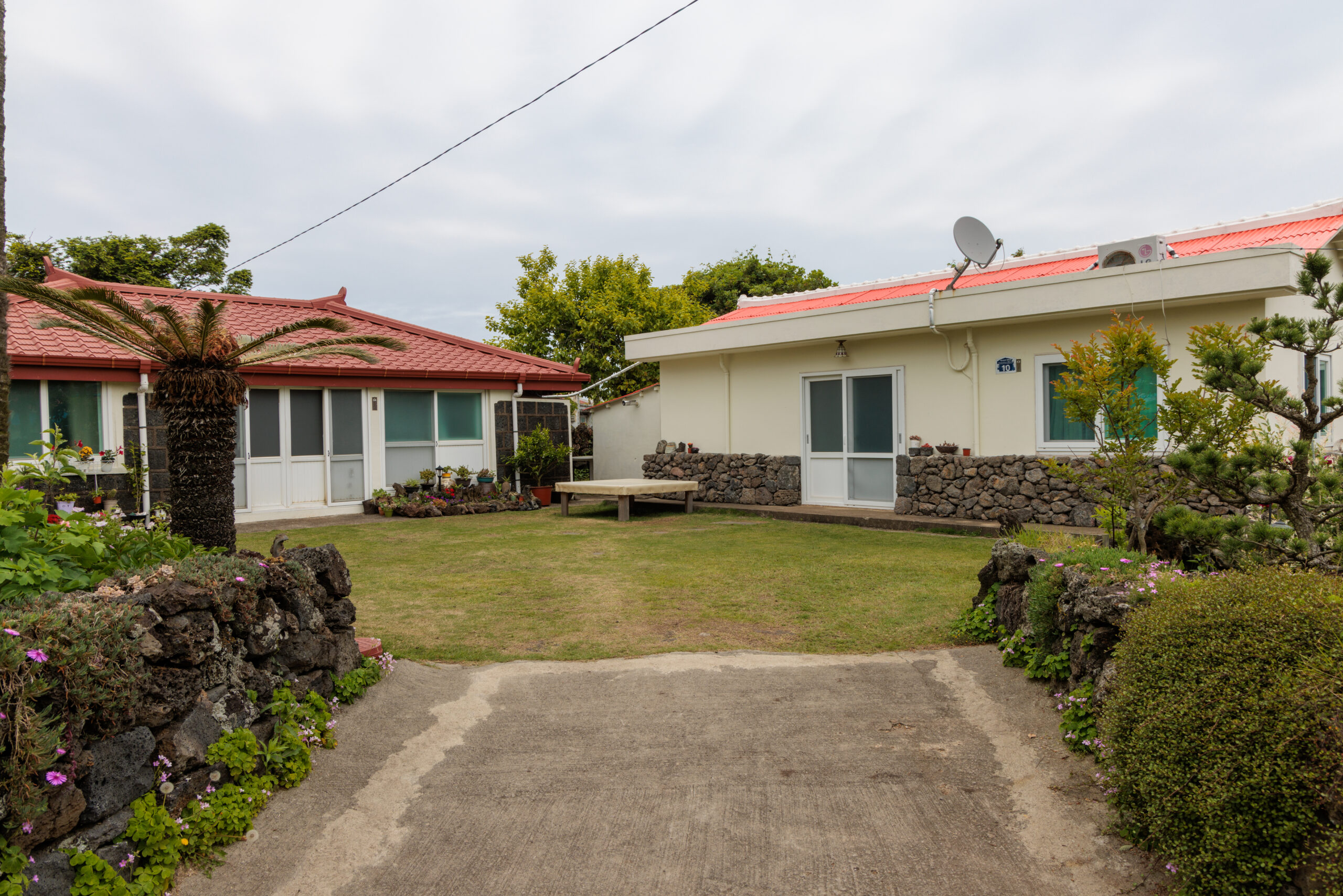
Welcome to Samdal-ri filming locations in Jeju are spread across the island rather than preserved as one walkable village. Visit Jeju officially identifies 15 locations, including Gimnyeong Beach, Pyeongdae-ri, Ojo Port and Gwangchigi Beach. This guide separates verified scene locations from realistic travel planning, with a focused east-coast route for drivers and two-stop alternatives for bus travelers.
Why Jeju is more than a backdrop
Welcome to Samdal-ri is built around the idea of leaving home and discovering what home still means. That is why the filming locations feel unusually important. They are not grand monuments. They are ports, beaches, village shade trees, oreum and coastal roads—places where ordinary Jeju life can plausibly continue after the characters leave the frame.
Visit Jeju’s official guide confirms 15 locations and links many of them to specific episodes. That gives travelers something better than a fan-made checklist: a way to follow the emotional geography of the series with verifiable stops.
Dodubong: where the story begins with a dream
Dodubong appears in episode 1 as the place where young Sam-dal and Yong-pil sit and draw their dreams. The small oreum rises near Jeju City and the airport, making it a practical first or last stop on the island.
The scene matters because the drama spends the rest of its story asking what happened to those early ambitions. Starting here makes the later locations feel like chapters rather than scenery.
Gimnyeong Beach: love becomes impossible to avoid
Visit Jeju identifies Gimnyeong Beach with the episode 12 scene in which Sam-dal tells Sang-tae that she cannot live without Yong-pil. Basalt and bright water give the scene a distinctly Jeju horizon, but the emotional importance comes from Sam-dal finally refusing to treat her relationship as something she can simply leave behind.
Gimnyeong works well as the beginning of an east-coast day. Give yourself time for the shoreline rather than arriving only for a photo.
Pyeongdae-ri: ordinary village life
The East Asian hackberry in Pyeongdae-ri, listed by Visit Jeju for episode 3, represents another side of the drama: a village gathering place rather than a spectacular attraction. The official guide describes Pyeongdae-ri as a quiet northeast-coast community suited to slow walks, cafés and small local restaurants.
This is exactly where screen-tourism etiquette matters. It is a living village. Keep noise low, do not obstruct residents and avoid treating private spaces as sets.
Ojo Port: the fictional Samdal-ri becomes tangible
Ojo Port is one of the most rewarding stops for fans because Visit Jeju identifies it as the filming area for the Samdal-ri bus stop and the Lucky Convenience Store frequented by the ‘Five Eagle Brothers.’ The official guide notes that the bus-stop set was retained after filming.
The port also gives you a view toward Seongsan Ilchulbong, so the stop works even when the drama connection is removed. Walk the harbor slowly and remember that what looked like a fictional hometown on television was assembled from real places spread across Jeju.
Gwangchigi Beach: the road becomes part of the relationship
In episode 8, Sam-dal and Yong-pil drive the coastal road near Gwangchigi Beach while submitting Jeju photographs to the Korea Meteorological Administration photo contest. Visit Jeju highlights the area for its sunrise views, distinctive coastline and Seongsan Ilchulbong backdrop.
This is a useful reminder that Samdal-ri repeatedly connects photography and weather with the way its characters see home. At Gwangchigi, the landscape is not just something Sam-dal photographs; it becomes part of how she learns to look at Jeju again.
Andol Oreum Secret Forest: rediscovering the photographer
Andol Oreum Secret Forest appears in episode 10 when Sam-dal agrees to photograph a couple and ends the day with a renewed sense of satisfaction. Visit Jeju confirms the location and notes its popularity for dense-tree photography.
The scene fits the place particularly well. Sam-dal’s career has become tied to pressure and scandal, but here photography returns to something simpler: observing people and light. For travelers, the lesson is similar—slow down enough to actually see the forest instead of using it as a backdrop.
Other verified locations worth building a second day around
The official Visit Jeju list extends far beyond the east. Waheul Buckwheat Village carries memories of Sang-tae and Bu Mi-ja; Gwaneumsa Temple appears in episode 14; Beophwan Port connects to the theme-park storyline; Gunsan Oreum is where Sam-dal goes looking for herself; Gapado carries one of Yong-pil’s most painful memories; Sindo Port connects to the dolphin storyline; and Sinchang Windmill Coastal Road appears in episode 13 as Sam-dal recognizes the endurance of Yong-pil’s love.
Group those additional locations by geography:
Jeju City side: Waheul Buckwheat Village and Gwaneumsa Temple, inland from the northern/eastern coast.
Southern Jeju: Beophwan Port near Seogwipo, or Gunsan Oreum in Andeok; choose the one that fits your base.
Western Jeju: Sindo Port and Sinchang Windmill Coastal Road, with driving or bus transfers between them.
Gapado: a separate island outing requiring a ferry and a confirmed return sailing. Do not append it to the east-coast drive. These are alternatives for another day, not one ready-made southern/western circuit.
A realistic east-Jeju story route
For a full day, consider Gimnyeong Beach → Pyeongdae-ri → Ojo Port → Gwangchigi Beach, adding Secret Forest only if opening conditions and daylight make sense. This route follows the coast generally eastward and keeps the drama’s village-and-sea atmosphere intact.
With a car or arranged taxis, the four coastal stops make the clearest full-day plan; Secret Forest is an optional inland detour, not a required fifth stop. By bus, choose Gimnyeong Beach + Pyeongdae-ri for a village-and-beach day, or Ojo Port + Gwangchigi Beach for the Seongsan-area locations. Save 김녕해수욕장, 평대리, 오조포구 and 광치기해변 in your map and check the return bus before leaving your base. The Tangerines-inspired Sehwa itinerary offers another focused eastern day; the Attorney Woo guide explains how to keep a temple visit separate from Seogwipo.
Do not expect Samdal-ri to exist as one village
This is perhaps the most important practical fact. The fictional hometown was created through locations across Jeju. There is no single preserved ‘Samdal-ri’ where every major scene can be found within walking distance. Understanding that before you travel prevents disappointment—and makes the real island more interesting.
The drama is about coming home. The best location trip should feel less like a hunt and more like learning why these landscapes could represent home.
Practical notes
Best first route: eastern Jeju
Suggested pace: 2 coastal stops by bus; 4 coastal stops by car, with an optional inland detour
Best for: coastal drives, photography, village atmosphere and slow K-drama travel
Respect: several locations are real communities rather than attractions
Updated: September 13, 2026.
Sources: Visit Jeju — Welcome to Samdal-ri filming locations. The official guide lists 15 locations and episode connections; operating conditions can change.
Featured photo: David Lee, Wikimedia Commons original, CC BY 2.0. Resized only; no other changes.
