Where was Vincenzo filmed, and is Geumga Plaza a real building? Geumga Plaza is the drama’s fictional name; Seoul’s official tourism guide identifies Sewoon Shopping Center as the real-world Vincenzo shooting location. The other easy verified stop is Seoullo 7017, used for the episode 3 night walk. This guide connects both places in a practical 3–4 hour route from Jongno/Euljiro to Seoul Station.
Seoul’s official tourism guide identifies four locations connected to the series. Rather than racing between them, this guide uses the strongest stops to build a practical day that still feels like Seoul after the drama references fade.
Main confirmed stops: Sewoon Shopping Center, then Seoullo 7017 near Seoul Station.
Suggested time: 3–4 hours for the two areas, a meal and the transfer.
Order: Sewoon in daylight; Seoullo around sunset.
Why Seoullo 7017 matters to Vincenzo fans
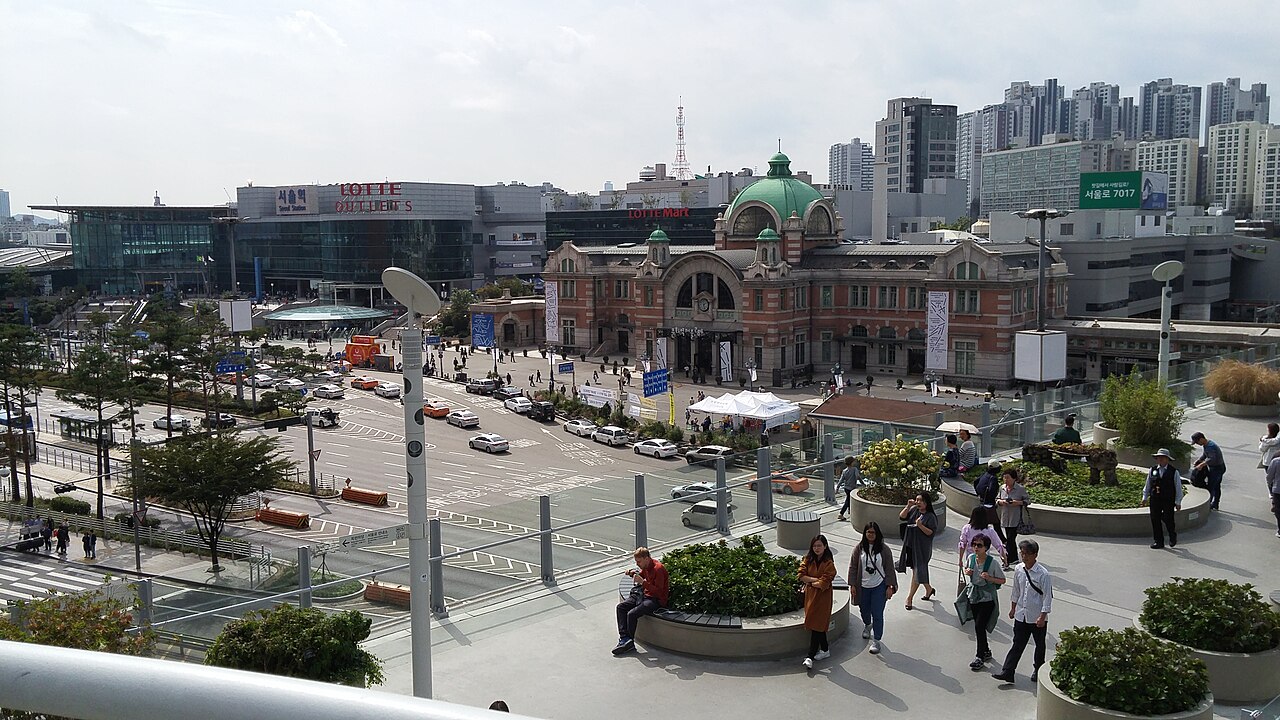
Seoul’s official English tourist guide identifies Seoullo 7017 as the night street walked by Vincenzo in episode 3. That makes it a useful stop for fans because it is not a studio set or an isolated attraction: it is part of central Seoul’s everyday pedestrian network.
The elevated walkway connects areas around Seoul Station and provides city views that become more atmospheric after sunset. Even visitors who do not want to recreate an exact camera angle can use the drama connection as a starting point for exploring this part of Seoul.
Sewoon Shopping Center: the real-world Geumga Plaza connection
For fans, Sewoon is the central stop: Visit Seoul identifies Sewoon Shopping Center with Geumga Plaza, the aging commercial building whose tenants become entangled in Vincenzo’s fight. Save 세운상가, 159 Cheonggyecheon-ro, Jongno-gu in your map. Explore public approaches and open commercial areas; filming history does not give access to offices or closed sections.
The real Sewoon area has its own history and identity, so visit it as an operating part of Seoul rather than expecting a preserved television set. Signs, interiors and businesses may differ from what appeared on screen. That difference is part of location travel: the camera borrowed a real place for a fictional story, then returned it to the city.
A sensible route is Sewoon in daylight → a meal in the Jongno/Euljiro area → Seoullo 7017 around sunset. This puts the working commercial district before the night-view stop. Individual Sewoon shops keep their own hours, so the route depends on public walking areas rather than a promised shop or rooftop opening.
How to plan your visit
Start at Sewoon, then move to Seoul Station
Begin with Sewoon’s public frontage and surrounding streets before heading to Seoul Station for Seoullo 7017. Use the subway or a taxi between the districts; reserve about 45 minutes in your plan for that move, including station walks, and adjust to the live route. If you already have little time after a train arrival, choose Seoullo alone as the shorter version.
Visit around sunset
The official Seoul guide specifically describes the location in connection with a night scene. Visiting before sunset lets you see the city in daylight and then watch the atmosphere change as street and building lights come on.
Combine the location with a broader Seoul route
A filming-location trip works better when the locations are part of a normal travel day. Seoul Station is a major transport hub, so this stop can be combined with nearby central districts instead of consuming an entire day on its own.
Choose the route version that fits your day
| Plan | What to include | Best for | Main trade-off |
|---|---|---|---|
| 60–90 minutes | Seoullo 7017 only, entered from the Seoul Station side | Travelers arriving by train or changing hotels | You miss the Geumga Plaza connection at Sewoon |
| 3–4 hours | Sewoon public areas, a Jongno/Euljiro meal, then Seoullo near sunset | Most first-time fans | The transfer between districts uses part of the afternoon |
| Half day | Sewoon, nearby Cheonggyecheon or Gwangjang Market, and Seoullo after dark | Travelers who want drama context plus a broader city walk | More walking and a greater dependence on weather |
The middle option is the most balanced because it treats Sewoon as the narrative anchor and Seoullo as the visual finish. If your priority is recreating a specific memory from the series, start by saving the official location names in Korean as well as English. “세운상가” and “서울로7017” are more useful search terms in Korean map apps than “Geumga Plaza,” which is the fictional name. Check the live route immediately before leaving each stop; central Seoul stations can have several exits, and the fastest transfer can change with your exact starting point.
Adjust for weather, mobility and filming expectations
On a hot, rainy or very cold day, shorten the outdoor portion rather than rushing both locations. Sewoon works better in daylight for understanding the building and its surrounding commercial streets, while Seoullo is more atmospheric around sunset and after dark. Travelers who need a step-free route should use the accessibility option in a current Korean map app and confirm the entrance they plan to use; do not assume that the nearest-looking entrance is the easiest one. Allow extra time for elevators, station corridors and crossings.
Neither location is a controlled television attraction. There is no guarantee that a storefront, sign or viewing angle will look exactly as it did during production, and some areas may be closed for ordinary business or maintenance. The reliable experience is to compare the drama’s mood with the living city: older electronics and workshop streets around Sewoon, then the elevated modern skyline near Seoul Station. That contrast explains why the two stops work better together than as isolated photo checks.
What should K-drama travelers expect?
Real filming locations often look different from what viewers remember on screen. Camera lenses, lighting, editing, traffic and seasonal conditions all change the appearance of a scene. The rewarding part is recognizing the urban setting while experiencing the neighborhood as it exists today.
This is especially true in Seoul, where filming is spread across functioning streets, parks, commercial areas and public facilities. Seoul Metropolitan Government reported that 181 television and film productions used facilities managed by the Seoul Facilities Corporation in 2024, showing how deeply ordinary city spaces are connected with Korean screen production.
Tips for photographing the area
Use the pedestrian route rather than stopping in traffic areas, and avoid blocking commuters while trying to reproduce a scene. A wider composition usually works better here because the appeal is the surrounding Seoul skyline and road network rather than one small object.
If you visit after dark, modern phones can produce good results without flash. Keep the camera steady and allow the city lights to become part of the composition.
Is it worth visiting if you are not a Vincenzo superfan?
Yes, particularly if you are already passing through Seoul Station. A strong filming-location stop should still be interesting after the drama connection is removed. Seoullo 7017 works because it gives visitors an elevated perspective on a busy part of central Seoul while also carrying a recognizable K-drama association.
A simple Vincenzo fan itinerary
Start at Sewoon in the afternoon, walk the accessible public areas, then eat in the Jongno/Euljiro district. The Gwangjang Market food guide provides one meal option to evaluate nearby. Transfer to Seoul Station and walk Seoullo 7017 before sunset, staying until the lights appear. Allow around 3–4 hours for the two stops, a meal and the transfer, with the sunset time setting your pace.
For a longer Vincenzo trip, the official course also includes Grandpa Factory in Seongsu. Keep that for a separate Seongsu half-day walk instead of adding another cross-city journey to this afternoon route.
Before you go
Is Geumga Plaza a real building?
Geumga Plaza is a fictional name used in Vincenzo. Visit Seoul identifies Sewoon Shopping Center as the real filming location. Expect a functioning commercial complex rather than a preserved television set, and use the Korean map term 세운상가.
Filming-location information can remain accurate while individual businesses, access routes and surrounding streets change. Check current local navigation on the day of your visit. For public transport in Korea, a Korean mapping app such as NAVER Map is generally more useful for detailed local routing than relying only on a remembered drama scene.
Information rechecked: October 24, 2026. Public access, shop hours and transport conditions can change; confirm the live route before visiting.
Official sources: Visit Seoul — Vincenzo filming locations | Seoul Metropolitan Government — Official Tourist Guidebook | Seoul Metropolitan Government — Seoul Filming Locations
Featured photo: Seoullo 7017 near Seoul Station, photographed in 2017 (location reference, not a Vincenzo production still). Photo by Christian Bolz / Wikimedia Commons, licensed CC BY-SA 4.0. Wikimedia resized to 1280px; no other edits.
