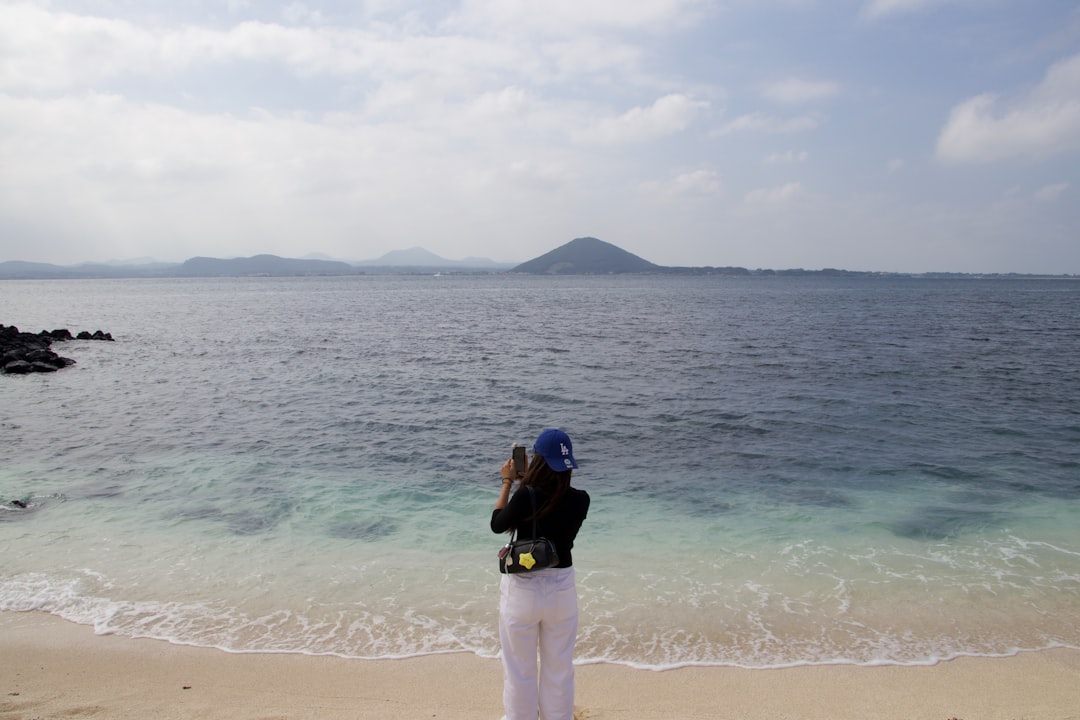
Udo Island is one of the easiest offshore trips to add to an east-Jeju itinerary, but it is not a place to plan around a fixed ferry time copied from an old blog. Visit Jeju’s official guide says ferries operate from Seongsan Port and Jongdal Port, the crossing takes about 10–15 minutes depending on the route, and operations can change with weather and sea conditions.
That makes the best Udo plan simple: choose your port, check the live operating status on the day, and leave enough time to return before the final ferry.
Two ferry gateways: Seongsan and Jongdal
Visit Jeju identifies both Seongsan Port and Jongdal Port as gateways to Udo. Seongsan is the more obvious choice for many first-time visitors because it is close to Seongsan Ilchulbong and is already part of common east-Jeju routes.
If you are staying elsewhere on the eastern coast, Jongdal can be worth checking. Do not assume both ports have identical schedules on your travel date.
How long does the ferry take?
The official tourism guide gives an approximate crossing time of 10 to 15 minutes, depending on the route. The boat ride itself is short; the bigger planning issues are waiting, ticketing, weather, and the time you want to spend on Udo.
How much time should you allow on Udo?
Visit Jeju describes Udo as about 3.8 km long with a circumference of roughly 17 km. Walking around the island continuously can take about three to four hours. Most visitors do not walk the full circuit without stops.
For a trip that includes one or two major sights, a café or meal, and transport around the island, three to four hours on Udo is a practical minimum based on the official guide. A slower visit can easily take longer.
What to see if you only have a few hours
The official Udo guide highlights places such as Geommeolle Beach, Udobong Peak, the rhodolith beach often known as Seobinbaeksa, and Hagosudong Beach. Trying to tick off every attraction in a short visit can turn a relaxed island trip into constant transport.
A better approach is to choose one coastal stop, one viewpoint or walk, and time for food or a café. If you are already visiting Seongsan Ilchulbong the same day, leave enough buffer rather than scheduling both too tightly.
Walking, cycling and local mobility
Visit Jeju notes that many visitors use bicycles and permitted electric mobility vehicles to reach Udo’s main attractions. Availability, rental conditions and vehicle rules can change, so check the operator and current island rules before paying.
Do not assume a standard rental car from Jeju can automatically be taken onto Udo. Vehicle-entry restrictions and exceptions can apply, and the rules may depend on the traveler and vehicle category. For most short-stay visitors, planning to leave the car on Jeju and use island transport is the lower-risk assumption until you confirm otherwise.
Weather matters more than your itinerary
Ferry operations are sea-dependent. Even if the sky looks reasonable at your hotel, wind and marine conditions can affect sailings. Visit Jeju explicitly recommends checking operating status on the day of travel.
If Udo is a must-do, schedule it earlier in your Jeju stay rather than on the final morning before a flight. That gives you a backup day if ferries are disrupted.
A realistic half-day Udo plan
- Reach Seongsan or Jongdal Port early enough to check the day’s ferry schedule.
- Buy the appropriate ticket and confirm the final return sailing before boarding.
- Cross to Udo in roughly 10–15 minutes.
- Choose two or three priorities instead of circling every attraction.
- Return to the port with a buffer before the final ferry.
If you are traveling without a rental car, combine this with our Jeju Airport to Seongsan bus guide rather than assuming east-Jeju transfers will be fast.
Build a backup plan before you board
Because ferry operations are weather-sensitive, decide in advance what you will do if sailings are delayed or suspended. If you are based in Seongsan, an easy fallback is to spend more time around Seongsan Ilchulbong, nearby cafés or the east-coast area instead of waiting indefinitely at the port. Travelers with a rental car can keep a second east-Jeju stop saved in their map app and switch plans quickly.
This is especially important on a short trip. If Udo is one of your top priorities, schedule it on the first or second full day in Jeju rather than the final day. That gives you another chance if wind or sea conditions disrupt service.
What to check before leaving Udo
Before starting your final sightseeing stop, confirm the last return ferry again and allow extra time to reach the port. Do not plan around the theoretical minimum transfer time. Rental bicycle returns, café queues, traffic around popular beaches and waiting for local transport can all take longer than expected.
If you rented any mobility equipment, ask about the return location and closing time when you pick it up. Keep your ferry ticket and identification accessible rather than packed at the bottom of a bag. Travelers connecting to a flight or long-distance bus later the same day should add a much larger buffer than day-trippers returning to a nearby hotel.
FAQ
How long is the ferry from Jeju to Udo?
Visit Jeju gives an approximate crossing time of 10–15 minutes depending on the route.
Which port should first-time visitors use?
Seongsan Port is convenient if your itinerary already includes Seongsan Ilchulbong or eastern Jeju, while Jongdal Port is another official gateway. Check the current sailing schedule for both if timing matters.
Can I visit Udo in two hours?
The boat crossing is short, but two hours leaves very little time after waiting and local transport. The official tourism guide suggests that visiting one or two major attractions plus a café or restaurant generally takes around three to four hours.
Do ferries run in bad weather?
Operations may change or stop depending on weather and sea conditions. Check the operating status on the day rather than relying on a saved timetable.
Official source
Last verified: September 17, 2026. Jeju Tourism Organization’s Visit Jeju guide confirms ferry access from Seongsan and Jongdal, approximate 10–15 minute crossings, Udo’s scale, typical sightseeing time, and the need to check ferry operations for weather and sea conditions. Visit Jeju: Udo Island