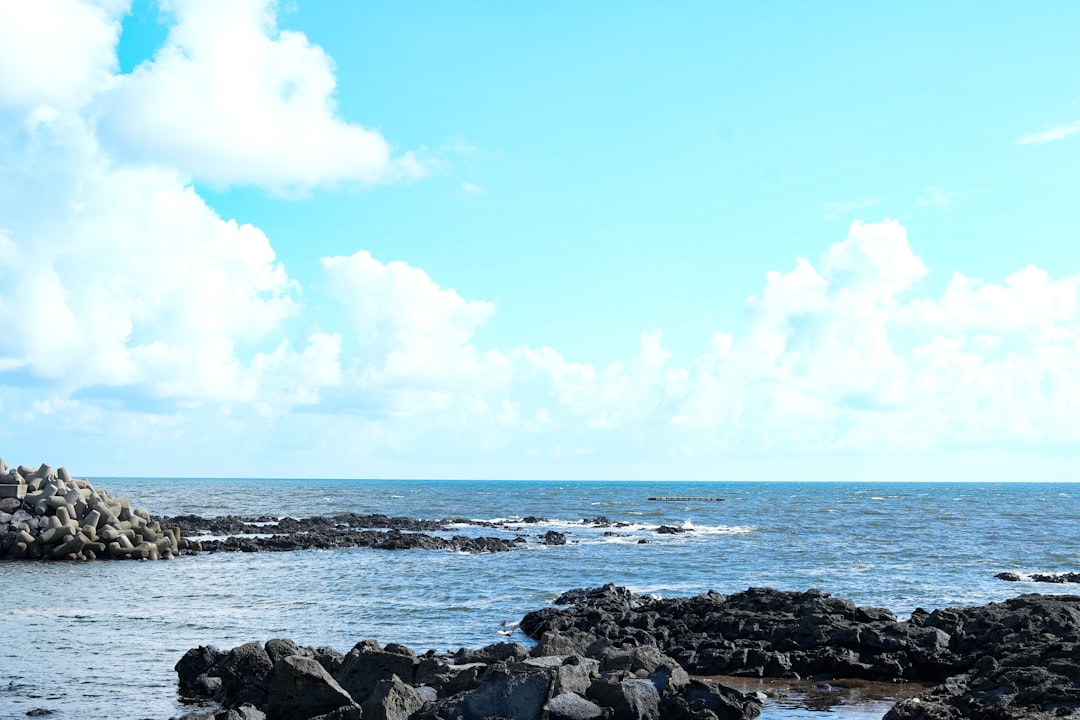
Southwest Jeju is one of the easiest places to build a compact scenic itinerary because Songaksan, Sagye Coast and the Sanbangsan area sit close enough together to avoid long backtracking. The key 2026 planning detail is important: Visit Jeju states that Songaksan’s summit area and summit trail are closed until July 31, 2027 for vegetation restoration, while other accessible areas remain open.
That means a good southwest itinerary should focus on the lower coastal scenery and nearby destinations rather than promising a summit hike that visitors cannot legally complete.
1. Start at Songaksan for the open coastal scenery
Songaksan sits on the southwest coast and combines volcanic landscape, ocean views and historical traces. The official Visit Jeju page notes the current summit closure but confirms that areas outside the summit and summit trail remain open.
Arrive earlier in the day if the weather is clear. Coastal wind can become stronger later, and parking areas can get busy on weekends. Do not cross barriers toward the closed summit route simply because you see an older blog or map showing access.
Allow around one to one and a half hours for a relaxed lower-area walk and viewpoints, depending on how much of the open route you explore. The open grassland and coastal views give the route a walking component without requiring a full mountain day.
2. Continue through Sagye Coast rather than jumping to another region
Sagye sits naturally between Songaksan and Sanbangsan. The area is useful for cafés, coastal viewpoints and a slower road-trip feel. Instead of adding another famous beach far away, use the geography to keep the day coherent.
On a clear day, the coastline offers views toward Sanbangsan and nearby islands, and Sagye gives you a strong Sanbangsan backdrop for photos. In strong wind, choose a café or short viewpoint rather than forcing a long exposed walk. You do not need to stop at every roadside viewpoint; pull over only in designated parking areas, because narrow coastal roads are not safe photo pullouts.
If you are traveling by bus, check the exact stop serving your next destination because “Sagye” covers a broad stretch rather than one compact attraction gate.
3. Sanbangsan is the visual anchor of the afternoon
Sanbangsan rises dramatically above the southwest coast and works as the final geographic anchor of this itinerary. You do not need to climb every possible trail to appreciate the area. The mountain, temple-area scenery and surrounding coastal landscape can fill a meaningful stop.
Yongmeori Coast lies nearby, but access there depends heavily on tides, waves and weather. Treat Yongmeori as a conditional extra, not a guaranteed step. Check same-day opening information before walking toward the entrance.
If Yongmeori is closed, keep the itinerary around Sanbangsan and Sagye instead of driving across the island to “replace” it.
4. Car versus bus
A rental car makes this route easier because the three areas are close by road but not always perfectly connected by one frequent bus. Parking can still be competitive on weekends, so avoid assuming you can stop directly at every viewpoint.
Without a car, use the west-coast trunk network and be willing to take one short taxi between attractions. A bus-plus-taxi combination can save more time than waiting for a low-frequency local connection.
If you are based in Seogwipo or Jungmun, this half-day route is more practical than if you are staying in far east Jeju. From Jeju City, allow extra transfer time.
5. A sample four-to-five-hour plan
09:00–10:30: Songaksan lower coastal area and viewpoints.
10:45–11:30: Sagye coast or a café stop.
11:45–13:00: Sanbangsan area and lunch nearby.
After 13:00: add Yongmeori only if official same-day access is confirmed, or finish with a slower coastal stop.
The schedule deliberately leaves room for weather and traffic. Southwest Jeju is more enjoyable when you stop adding attractions after the route already feels complete.
Choose one meal zone in advance—Moseulpo, Sagye, Hwasun or the Sanbangsan area—rather than searching for lunch after every stop or driving to a famous restaurant in Jeju City. If Yongmeori is closed by sea conditions, use that extra hour for lunch instead of a distant substitute attraction.
For an afternoon start, reverse the route so the final coastal stop faces the evening light. Check sunset time and weather, finish at a safe viewpoint rather than on an unfamiliar trail after dark, and carry a light layer because the wind can feel much colder after sunset.
Travelers with limited mobility, small children or a same-day flight should pick two main stops, not all of them: Sanbangsan plus Sagye, or Songaksan plus a coastal meal, can be a complete half-day.
6. Safety and conservation rules matter
- Respect the Songaksan summit closure through July 31, 2027.
- Do not enter cliff edges or military-history remains outside safe paths.
- Check Yongmeori access on the same day.
- Wear shoes suitable for volcanic and coastal ground.
- Keep extra wind protection even on a sunny day.
- Do not schedule this route immediately before a flight from Jeju Airport.
The southwest coast can look calm from a parking lot while exposed sections are much windier. Check both wind and rain, not just the temperature, and adjust the walk rather than treating the itinerary as a fixed checklist.
Official sources
Visit Jeju official Songaksan page: Songaksan Mountain. The official page states that the summit area and summit trail are closed until July 31, 2027 while other areas remain open. Last verified September 26, 2026.
Bottom line: southwest Jeju works best as a compact landscape route. Use Songaksan’s open lower areas, Sagye Coast and Sanbangsan, and treat Yongmeori as a weather-dependent bonus.