
Updated: September 16, 2026
Gyeongbokgung Palace is one of the most important historic sites for first-time visitors to Seoul. Built in 1395, it was the primary palace of the Joseon dynasty and remains the largest of Seoul’s Five Grand Palaces.
This guide uses official Korean heritage and tourism sources. Operating details can change for special events, maintenance or weather, so check the official palace website before your visit.
Why Gyeongbokgung matters
Gyeongbokgung was established in 1395, three years after the founding of the Joseon dynasty. The palace was destroyed during the Japanese invasions in 1592 and was extensively restored in 1867 during King Gojong’s reign. Large-scale restoration work has continued in modern Korea.
Visitors can see major palace spaces including Gwanghwamun Gate, Geunjeongjeon Hall, Gyeonghoeru Pavilion and Hyangwonjeong Pavilion. The palace is also historically connected with the creation and distribution of Hunminjeongeum, the writing system that developed into modern Hangul.
Opening hours in 2026
The official daytime hours are November–February 09:00–17:00; March–May and September–October 09:00–18:00; June–August 09:00–18:30. Final admission is one hour before closing.
Gyeongbokgung normally closes on Tuesdays. If a regular closing day coincides with a public holiday, it opens and closes on the first non-holiday afterward. Check special notices around the September 2026 Chuseok holiday. Evening programs have separate entry arrangements.
Admission and hanbok
The official admission table lists KRW 3,000 for international visitors aged 19–64. Age-based free entry and other exemptions have their own conditions, so bring identification if claiming one.
Both traditional and modern everyday hanbok can qualify for free admission, including for international visitors. The official hanbok guide requires a jeogori with a wrapping collar plus a hanbok skirt or hanbok trousers. A jeogori with jeans, a T-shirt with a hanbok bottom, or a durumagi overcoat alone does not qualify. Show the illustrated guide to the rental shop before choosing your outfit.
Address and subway access
The official address is 161 Sajik-ro, Jongno-gu, Seoul. Gyeongbokgung Station on Seoul Subway Line 3 is the closest commonly used subway stop; official Seoul tourism information lists Exit 5 at roughly 216 meters from the palace. Gwanghwamun Station on Line 5 is another option.
A realistic first-visit walking route
Suggested route: Gwanghwamun → Geunjeongjeon courtyard → Gyeonghoeru pond-side viewing area → Hyangwonjeong surroundings → your chosen open exit. Allow about two to three hours as an editorial planning estimate, not an official tour duration. This plan is for the public grounds: it does not promise access inside every hall, onto a pavilion or across a restricted bridge.


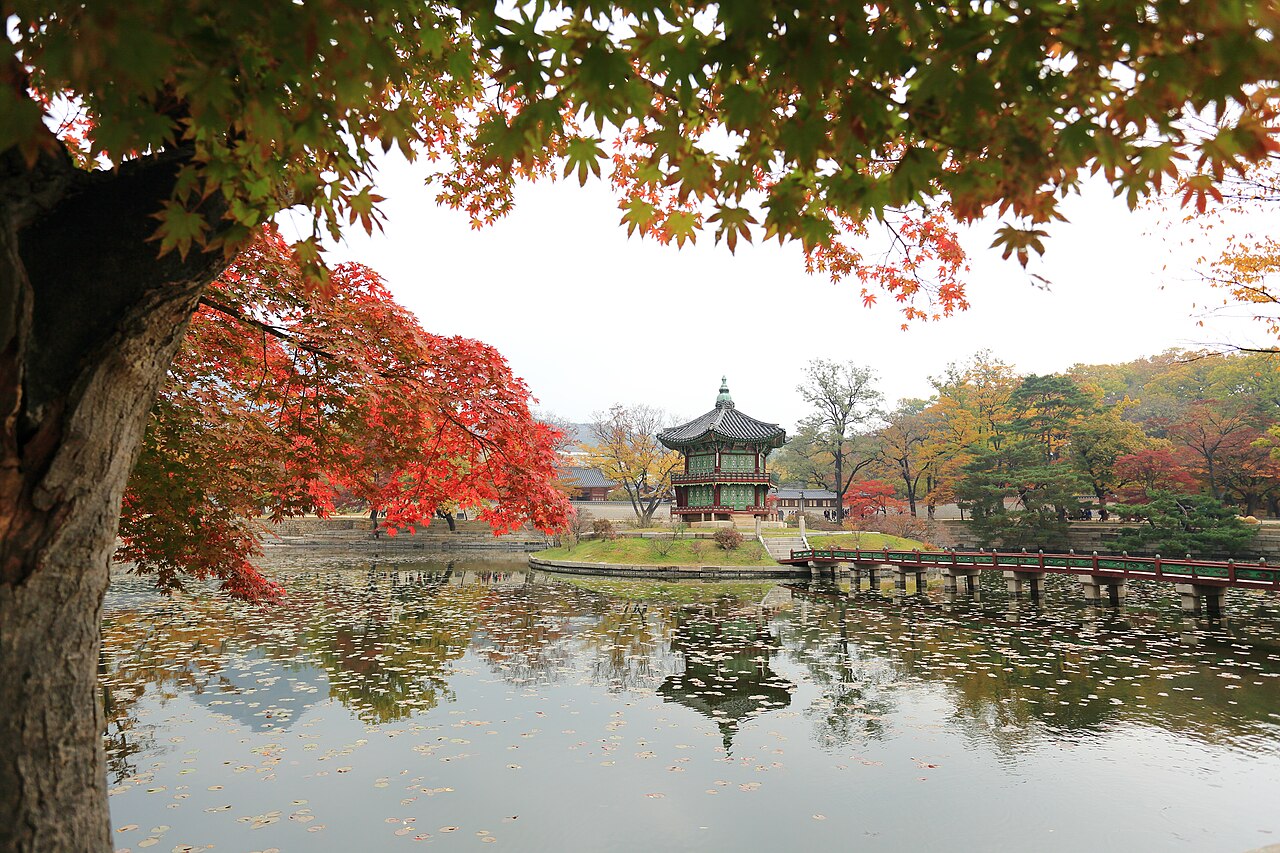
Start at Gwanghwamun Gate and continue toward Geunjeongjeon, the palace’s main throne hall. Gyeonghoeru Pavilion, set beside a large pond, is one of the palace’s best-known architectural sights. Farther north, Hyangwonjeong Pavilion offers a quieter landscape around its pond.
The National Palace Museum of Korea is near the palace grounds, and the National Folk Museum of Korea is also nearby. For a meal west of the palace, follow our Tongin Market and Seochon food guide and check the market program’s operating day before going.
For a shorter visit, choose fewer stops. With around 90 minutes available, make the main courtyard and one pond-side area your priorities, then leave enough time to walk back. Trying to fit every northern compound into the final hour creates unnecessary rushing. For a slower visit, add the northern garden area before a meal outside the palace; treat any museum as a separate stop with its own opening and admission rules.
Budget time for hanbok rental separately. Choosing clothes, changing, storing bags and returning the outfit are not part of the palace walk. Compare the rental cost and return time with what you actually want from the visit. Free palace admission for qualifying hanbok does not make the clothing rental free, and dressing only to save a small admission fee may not suit your schedule.

Plan around the person who walks most slowly. Keep photo stops away from entrances and marked routes, leave room for other visitors, and follow staff directions at stone steps and temporary barriers. Travelers needing a step-free route should ask the palace about the current accessible approach rather than assume that every historic threshold can be crossed. Bring suitable footwear even when renting hanbok.
Daytime admission and evening experiences are different plans. The published daytime closing hour is not a promise that you can stay for a night program. Check the palace’s current notices for evening dates, reservations and special pavilion visits. Do not assume a general admission ticket or a daytime exemption automatically includes every separately operated program. A Tuesday closure is also a reason to rearrange the palace visit, not to expect access through another gate.
2026 visitor note
September–October 2026: the Royal Palaces and Tombs Center’s August 30 notice lists restricted access to the Geunjeongjeon woldae, the raised stone terrace, from September 2 through October 31, 2026. This notice concerns the terrace, not a closure of the entire palace. Respect the actual barriers and view the hall from permitted areas; an older photograph showing visitors on the terrace is not permission to enter it now.
Sources and verification
Official sources checked: Korea Heritage Service, Royal Palaces and Tombs Center — Gyeongbokgung official information and Gyeongbokgung history; Korea Tourism Organization — VISITKOREA Gyeongbokgung Palace; Seoul Tourism Organization — Visit Seoul Gyeongbokgung. Daytime hours, fees, hanbok rules and current terrace-restriction notice checked September 16, 2026. Featured photo: Gyeonghoeru in September 2016, Smin630 · original · CC BY-SA 4.0 (resized). All photographs identify their capture date and do not replace current access notices.
